Where to stay in Milan
Which Milan neighbourhood to pick based on why you are coming, with real metro times to the centre, the trade fairs and the universities.
4 min readUpdated September 17, 2026
Milan takes half an hour to cross. It is the thing that surprises people who arrive expecting a sprawling metropolis: from the outermost neighbourhood served by the metro to the Duomo is twenty minutes, and from one end of the city to the other is little more than forty. That changes the whole calculation about where to sleep.
The right question is not "how close am I to the centre" but "how close am I to the thing I came for". Someone here for a trade fair at Rho needs the red line. Someone here for a master's at Bicocca needs the lilac one. Someone here for the Politecnico needs the green one. The historic centre is a quarter of an hour from all three.
How the city works
Milan is built as concentric rings cut through by four metro lines and a circular railway, the Passante. The rings matter less than the lines: two addresses the same distance from the Duomo can be ten or forty minutes apart depending on how they are served.
The lines that matter for a short stay:
- M1, red — crosses the city east to west and reaches Rho Fiera, the exhibition centre. This is the trade fair line, and the Salone del Mobile line.
- M2, green — connects Central Station, Lambrate and Città Studi. The line of the technical universities and the regional trains.
- M3, yellow — Central Station, Duomo, the north-south axis.
- M5, lilac — the newest line in the north: Bicocca, Isola, the San Siro stadium.
- M4, blue — connects Linate airport to the centre in about half an hour.
The north-east, where our apartments are
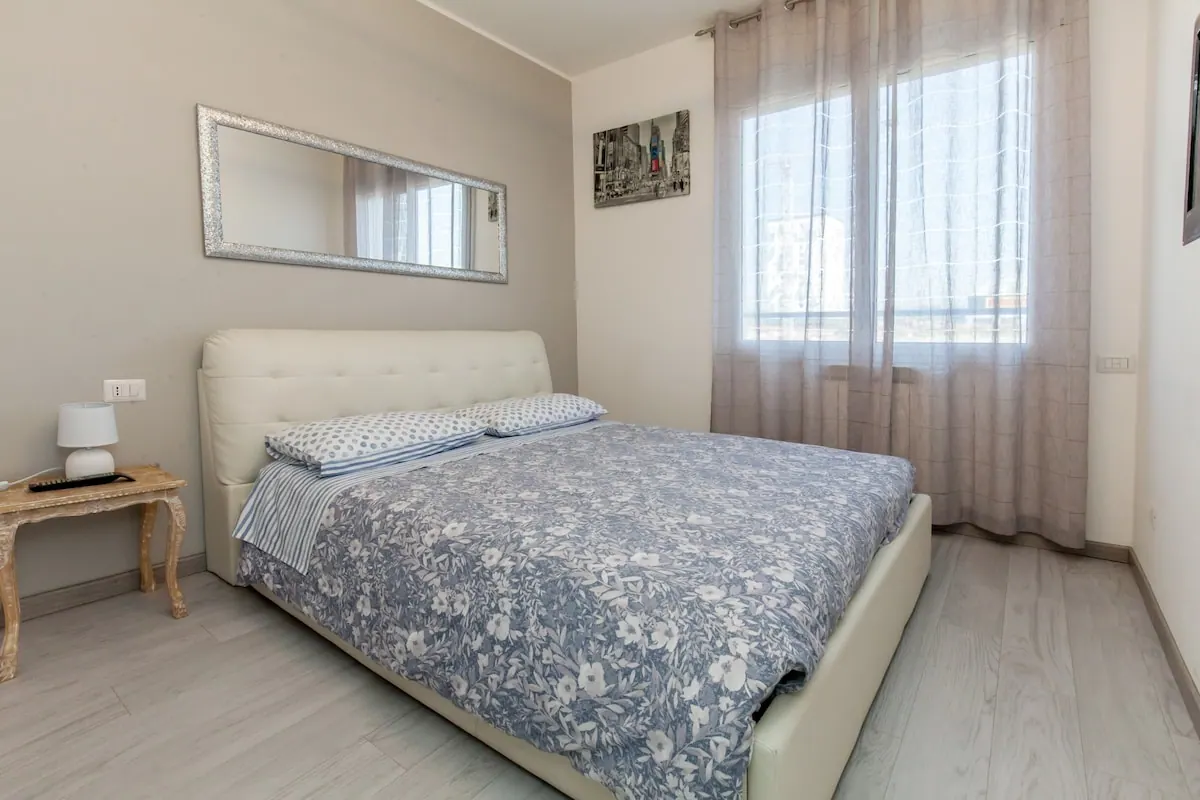
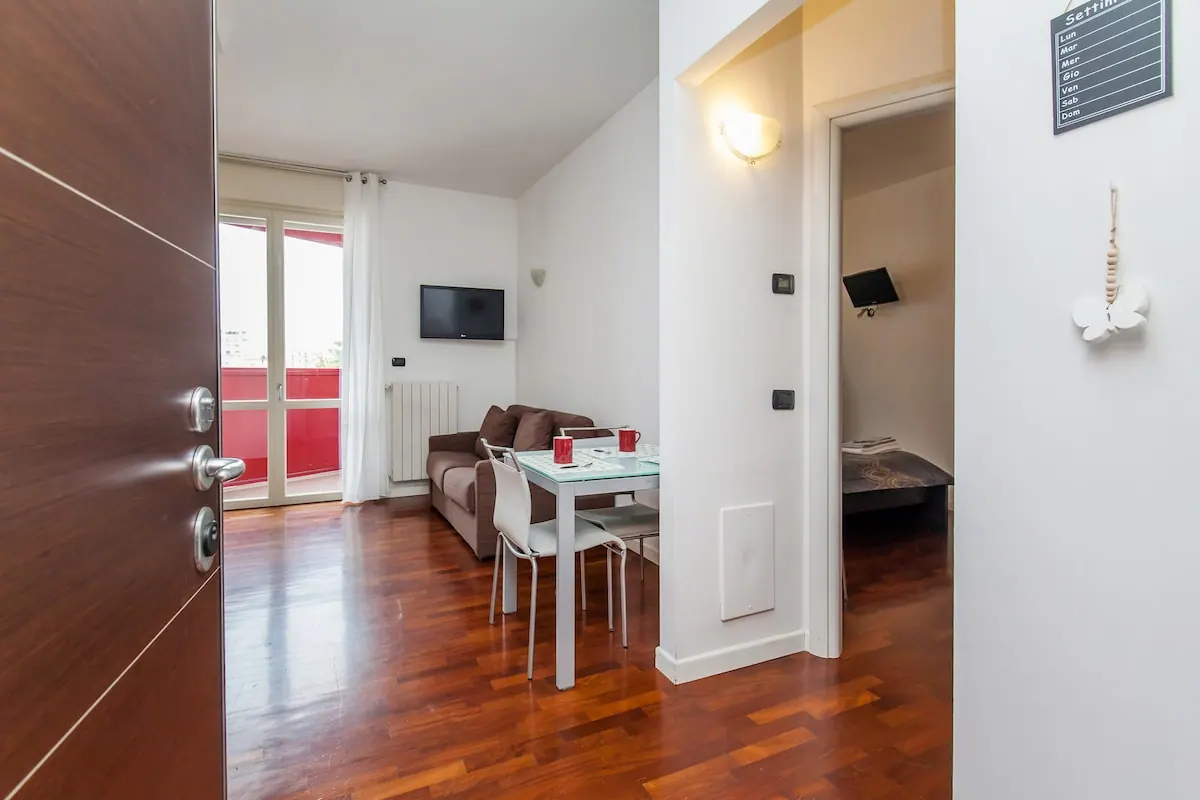
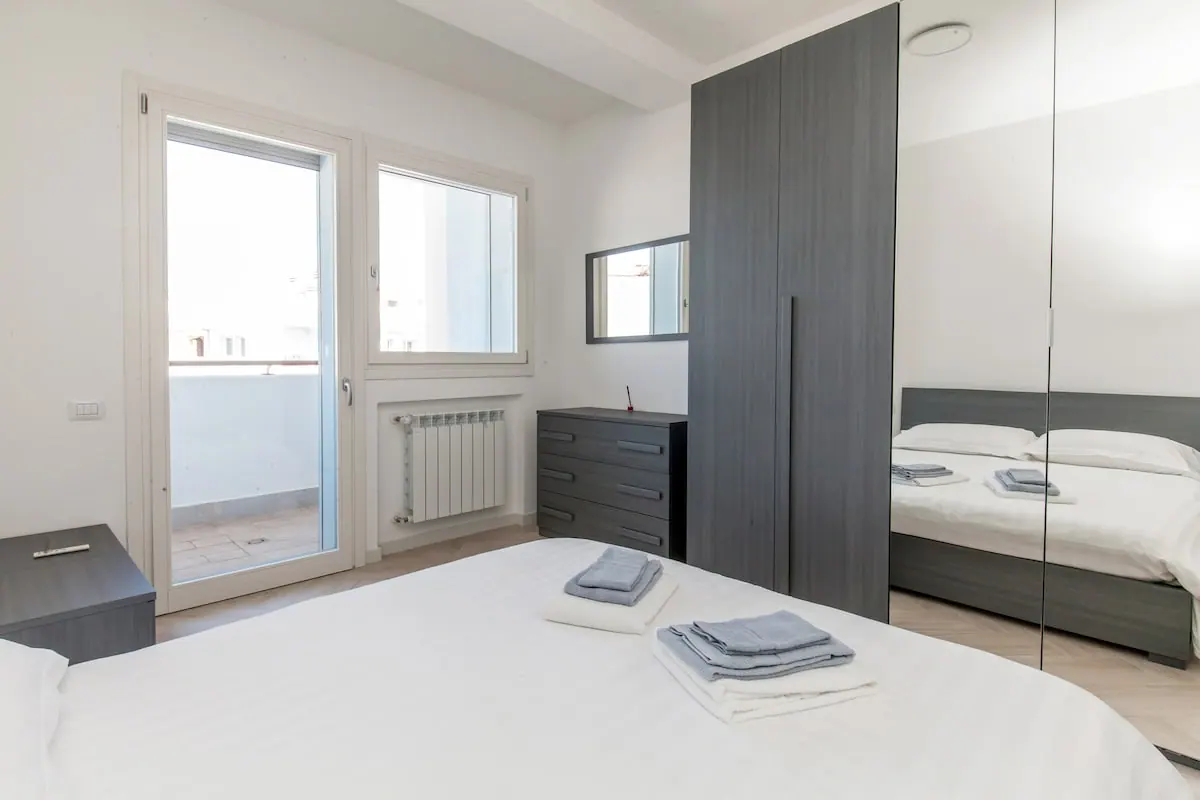
Our apartments all sit in the same quadrant of Milan: Bicocca, Città Studi and Lambrate. That is not an accident, and it is why this guide mostly talks about that part of the city.
It is the Milan that has changed most in the last twenty years. Where the Pirelli factories stood there is now a university campus with thirty thousand students, a contemporary opera house and one of the largest art spaces in Europe. Underneath, though, it is still a real residential neighbourhood, with local markets, bakeries and the prices of a place where people live — not one where people get photographed.
Bicocca
The university, the Teatro degli Arcimboldi, Pirelli HangarBicocca. The M5 metro to the centre, or the Passante railway from Greco Pirelli towards Monza. The natural choice for students, for anyone working in the northern business district, and for anyone who wants to spend less while staying inside the city.
→ Staying in Bicocca: what is actually around you
Città Studi and Porpora
The Politecnico, the medical faculty, the hospitals. A neighbourhood of low buildings and tree-lined avenues, full of students but without the noise of the Navigli. Loreto is a hub: M1 and M2 meet there, which means reaching anywhere without a change.
→ Città Studi and Porpora: the university quarter
Torre Diamante and viale Pirelli
The new towers on the edge of the campus. High views, lifts, everything recent. This is the area for people here on business who want an apartment that feels like a hotel without being one.
→ Torre Diamante: staying high in Bicocca
Lambrate
Via Monte Nevoso, a few minutes' walk from Lambrate station and the M2: seven apartments in a renovated building. Former industrial spaces turned into studios and galleries, quiet residential streets, and Central Station just a few metro stops away.
How long it actually takes
From our apartments, by metro:
| Destination | From Bicocca | From Città Studi |
|---|---|---|
| Duomo | ~25 min | ~15 min |
| Central Station | ~15 min | ~10 min |
| Rho Fiera | ~45 min | ~40 min |
| Linate airport | ~45 min | ~35 min |
| Politecnico Leonardo | ~30 min | walking |
| Bicocca University | walking | ~25 min |
These are door-to-door times, walking included. Milan's metro runs every two or three minutes at peak times and is never the bottleneck.
What to check before booking
The floor and the lift. Milan has plenty of 1960s buildings without one. If you are arriving with a large suitcase, check.
Air conditioning. From June to September the city goes past thirty-five degrees, and the humidity of the Po valley makes it heavier than the number suggests. It is not an optional extra.
The nearest metro stop, not the distance in kilometres. An apartment three kilometres from the Duomo but five hundred metres from a metro station is more convenient than one at a kilometre and a half without.
How long you are staying. Under three nights, stay central. Over a week, pick a residential neighbourhood: you spend less, you eat better and you sleep.
Booking direct
All our apartments are booked from this site through the same calendar we use on Airbnb and Booking, so a double booking is not possible. Booking here skips the portal commissions.
Frequently asked questions
- What is the best area to stay in Milan?
- It depends on why you are coming. For the university and Design Week, Bicocca. For the Politecnico and the hospitals, Città Studi. For the historic centre, any neighbourhood on the M1 or M2 line. Milan is compact, so what matters is metro minutes, not kilometres.
- Is it worth staying in the centre of Milan?
- Rarely. The centre costs twice as much and is still fifteen minutes by metro from half the city. The north-eastern neighbourhoods offer the same travel time at a lower price, and they are quieter in the evening.
- How long does it take from the north-east to the Duomo?
- Between fifteen and twenty-five minutes by metro, with no changes from the M1 and one change from the M5. Milan's metro closes around 00:30 and opens at 05:40.